


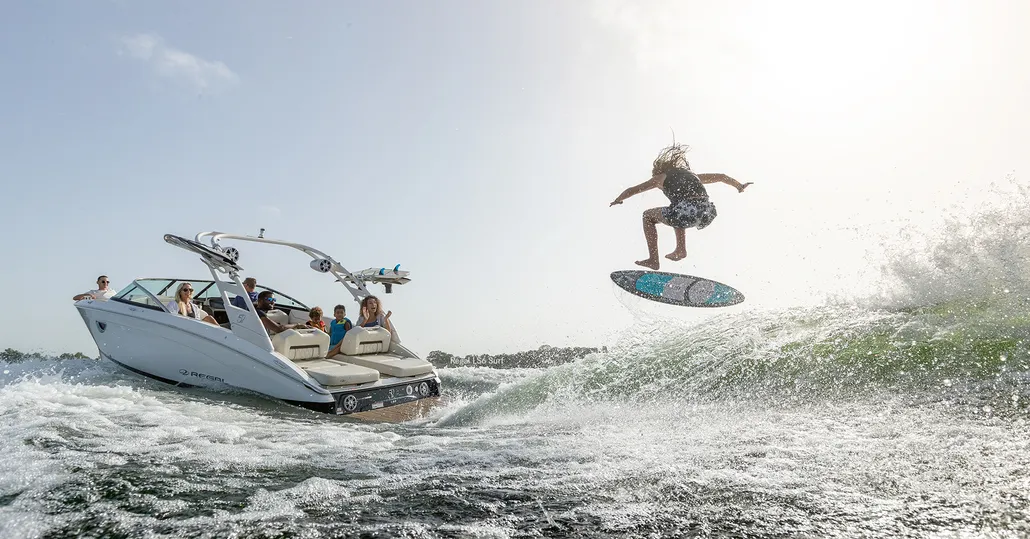
Evaluating the performance characteristics and tactical requirements of tow-sports platforms is essential for configuring an optimal recreational layout. For North Texas mariners navigating the waters of Lake Lewisville or Grapevine Lake, introducing a crew to towed aquatic disciplines requires a clear understanding of hull dynamics, tow-line configurations, and hydrodynamic mechanics. Choosing between the high-velocity displacement of wakeboarding and the close-proximity wave tracking of wakesurfing directly dictates how you ballasted your hull and manage your propulsion systems.
By breaking down both sports into their core mechanical components, captains can align their tow plans with their crew’s technical abilities and safety constraints.
Structural and Mechanical Comparison Matrix
Wakeboarding and wakesurfing rely on opposing hydrodynamic forces and velocity models, which directly influence your boat's fuel-burn rates and hull stress parameters.
- Wakeboarding Architecture: This discipline requires a sustained towing speed typically ranging between 18 and 22 MPH. The rider is physically locked into fixed structural bindings and connected to a low-stretch tow rope measuring 60 to 75 feet. The hull is configured to ride flat and clean, generating a firm, symmetrical wake crest. The rider leverages this hard water wedge to generate significant vertical lift or "pop" for aerial tricks. Because of the higher velocities involved, initial falls are high-impact events that apply sudden tensile loads across your tow towers and transom hardware.
- Wakesurfing Architecture: This sport operates at a significantly lower velocity baseline, typically holding a stable tracking speed between 10 and 12 MPH. The surfer utilizes a loose, non-binding board and uses a specialized thick, knotted tow rope solely to lift out of the deep-water hole shot. Once positioned within the pocket of the wave, the surfer drops the line entirely, riding the continuous energy generated by the boat's displaced hull. This requires dense, asymmetrical ballast configurations or automated wake-shaping plates to deform the wake into a clean, rolling surf curl. Falls occur at low speeds and are low-impact, but the rider operates in close proximity to the transom.
Strategic Crew Allocation and On-Water Logistics
Selecting which sport to introduce to your passengers depends on their existing athletic backgrounds and your specific expectations for handling your watercraft.
- The Board Feel Dynamic: If your passengers possess experience with skateboards, snowboards, or traditional ocean surfing, they will naturally adapt to the heel-toe carving inputs and loose tracking lines of a wakesurf board.
- The Trick Progression Model: For crews prioritizing high-amplitude aerial maneuvers, spins, and systematic linear progressions, wakeboarding provides the rigid edge control and line tension necessary to launch clear of the wake.
- Sustained Operational Repeats: Because wakesurfing falls occur at slow speeds, riders expend significantly less physical energy per set. This enables faster deep-water recoveries and allows for more consecutive rider rotations before the crew experiences physical exhaustion.
Onboard Hardware Metrics and Structural Prep
Operating a safe tow environment requires outfitting your deck layout with premium, sport-specific gear built to withstand continuous mechanical stress.
- Sports-Specific PFD Configurations: Traditional, bulky life jackets can restrict core rotation and shift unpredictably during high-velocity impacts. Equip your riders with high-mobility, impact-rated Coast Guard-approved life vests that fit snugly around the torso.
- Tow Line Structural Integrity: Never utilize a standard, elastic water-ski rope for wakeboarding, as line stretch creates dangerous recoil energy. Wakesurf lines must be short, thick, and heavily knotted, featuring durable foam floats to prevent the loose rope from sinking into your running gear.
- Rider Weight Synchronization: Attempting to train a beginner on a board that lacks sufficient surface area results in immediate sub-surface dragging and engine strain. Match board lengths directly with the rider’s exact physical displacement to ensure immediate planing.
- Inland Waterway Timing: To maximize tracking efficiency and minimize hull slamming, prioritize early-morning operational windows. Calm, glassy conditions allow your wake-shaping systems to cut a clean wave face, whereas heavy afternoon chop degrades wave symmetry and strains your automated ballast pumps.
Critical Propulsion and Safety Directives
The physical proximity of a wakesurfer to the stern demands a strict, non-negotiable safety code at the helm to prevent catastrophic accidents.
- Propulsion System Boundaries: Under no circumstances should any individual attempt to wakesurf behind a traditional sterndrive or inboard/outboard (I/O) boat featuring an exposed propeller. Wakesurfing is strictly restricted to specialized inboard towboats, forward-drive systems, or jet-propulsion platforms where the spinning blades are located safely underneath the hull.
- The Engine Shutdown Mandate: Whenever a rider is in the water near the swim platform, the captain must shift the helm cleanly into neutral and completely shut down the ignition. Never rely on an idling transmission to protect a swimmer from accidental gear engagement.
Technical Frequently Asked Questions
Is an expensive, surf-specific hull mandatory to generate a ridable wave?
While intermediate waves can be shaped behind standard inboard or forward-drive hulls utilizing aftermarket wake shaper blocks, a true factory surf boat equipped with integrated ballast tanks, internal tracking fins, and automated digital wake gates generates a vastly superior, highly consistent wave face.
What critical metrics must the captain monitor during continuous towing?
The operator must maintain strict rear-facing observation protocols through an approved mirror or a designated crew spotter. Monitor your engine operating temperatures continuously, as running a heavily ballasted boat at low speeds increases thermal loads on your cooling system and accelerates fuel consumption.
Sourcing Authorized Tow-Sports Upgrades
Maximizing your vessel’s towing performance requires configuring your platform with hardware calibrated to exact factory tolerances.
- Certified Ballast and System Diagnostics: If your automated wake plates respond sluggishly, or your ballast pumps struggle to evacuate water cleanly, do not risk electrical or hull complications. Schedule a diagnostic systems audit with our factory-trained technicians at our Service department.
- Procuring Premium Hardware: Visit our fully stocked Parts department in Lewisville to secure high-tensile tow ropes, specialized ballast fittings, sacrificial anodes, and genuine factory-direct lubricants to keep your drivetrain protected under heavy loads.
- Propulsion System Modernization: For owners looking to transition out of an older power plant or add digital speed control systems to an existing cruiser, our authorized Yamaha Repower bay installs modern digital networks for precise throttle synchronization.
Asset Reallocation and Dealership Inquiries
What credit frameworks exist for financing a modern tow-sports boat?
Our specialized Financing office provides tailored credit options, allowing you to bundle a high-performance modern hull, specialized ballast integrations, and localized Marine Insurance packages into a single structured framework.
Can I leverage my current traditional dayboat as trade equity toward a surf build?
Yes. We facilitate transparent, market-accurate asset evaluations through our Sell / Trade division, making it highly efficient to liquidate your old hull and apply that value directly toward our inventory of premium New Boats or strictly inspected Used Boats.
How do I track upcoming events or get in direct contact with Phil Dill Boats?
To learn about our corporate legacy serving North Texas mariners since 1953, visit our About page. You can monitor upcoming captain safety workshops and community events on our Events page, track continuous technical maintenance guides on our Blog, meet our technical personnel on the Staff page, or see verified customer feedback on our Reviews page. To review your long-term mechanical coverages, check our Extended Service Contracts checklist, and find current promotions on our Specials page. For showroom maps and operating hours, check our Contact page.