


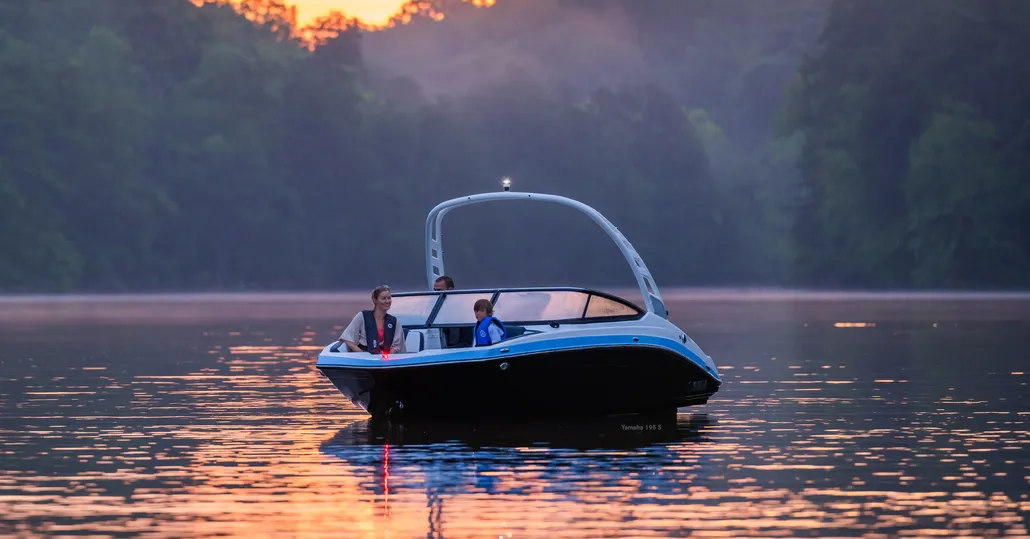
Re-entering the boating season after a period of winter inactivity frequently reveals a common operational challenge: a temporary decline in close-quarters maneuvering precision. Docking a watercraft under optimal conditions requires deliberate throttle management and spatial awareness, but handling a busy Saturday afternoon on Lake Lewisville or Grapevine Lake escalates the complexity. For Yamaha outboard and jet propulsion owners in the Dallas-Fort Worth metroplex, treating docking as a systematic, mechanical drill rather than an improvised maneuver eliminates stress and prevents costly gelcoat or structural damage.
Implementing a structured docking warm-up routine restores muscle memory and ensures your crew operates as a cohesive unit.
1. Pre-Stage Structural Docking Infrastructure
Maneuvering anxiety is heavily amplified when the captain is forced to manage the helm while passengers scramble to locate gear. Complete all physical staging in open water well before your final approach to the marina basin or boat slip.
- Fender Deployment: Hang heavy-duty marine fenders at the exact height of the target pier or floating dock along your primary boarding beam.
- Line Configuration: Cleat your bow, stern, and spring lines early, flaking the remaining rope neatly on the deck layout so they can be passed smoothly to dock hands without knotting.
- The No-Jump Mandate: Explicitly instruct your crew that no passenger is permitted to leap from a moving vessel onto a dock. A missed approach can easily be corrected with a short pulse of reverse throttle; a slipped footing between a concrete bulkhead and a multi-ton hull poses an immediate, severe safety hazard.
2. Execute Open-Water "Idle-Only" Transition Drills
Before committing to a confined slip, navigate to an open pocket of water to recalibrate your touch on the digital throttle and shift controls. This is particularly vital for jet-drive owners, as these platforms rely entirely on directed thrust rather than a traditional rudder or prop wash.
- The Neutral Drift Test: Bring the vessel to a complete stop to analyze real-time wind drift and current vectors against your superstructure.
- Pulse Throttle Management: Practice moving the hull using short, deliberate bumps of power—shifting into forward idle for one to two seconds, then immediately returning to neutral. Allowing the vessel’s existing momentum to do the heavy lifting prevents over-correcting and keeps your approach vector stable.
3. Establish Single-Commander Crew Protocols
A disorganized crew offering conflicting spatial estimates can completely disrupt a captain's focus during close-quarters berthing.
- Assign Specific Tasks: Designate a single crew member to handle the primary bow line and another to secure the stern. All other passengers must remain seated in designated zones to maintain a level running attitude and keep lines of sight completely unobstructed.
- Pinch Point Awareness: Warn your crew never to place their hands, arms, or legs between the gunwale and the dock structure to check momentum. Utilize the boat's mechanical reverse thrust to arrest forward speed, keeping fingers completely clear of high-pressure pinch points.
4. Implement a Strict "Abort and Reset" Operational Rule
There is zero penalty for abandoning a compromised approach line. If a sudden gust of wind or an unexpected wake from a passing wakeboard boat pushes your hull off course, immediately abort the maneuver.
- Clear the Structure: Shift cleanly into reverse, back out into open water, and re-align your vector. Forcing a bad angle under stress typically results in aggressive throttle inputs that compound the error, whereas a calm reset demonstrates true seamanship.
5. Differentiate Seamanship Errors from Mechanical Liabilities
If your hull consistently pulls unpredictably, or if shifting between forward, neutral, and reverse requires excessive physical effort, you are likely fighting a mechanical system failure rather than a lack of practice.
- Cable and Electronic Synchronization: Over the winter, marine steering fluids can develop air pockets, and mechanical shift cables can stretch or bind. Verify that your helm responses are immediate, smooth, and predictable.
- Professional Diagnostic Support: If your throttle detents feel loose or your steering system shows signs of fluid loss, do not compromise your safety. Schedule a comprehensive mechanical audit with our factory-certified technicians at the Service department to verify your controls are calibrated flawlessly for the season.
Frequently Asked Questions
What is the fastest way to master close-quarters docking?
The most effective strategy is practicing idle-only control in open water around a floating buoy or marker, combined with pre-staging all lines and fenders before entering the marina perimeter.
Should I approach my slip bow-first or stern-first?
This choice is dictated by local wind direction, current velocity, and your specific dock configuration. As a rule of thumb, always attempt to dock heading into the prevailing wind or current, as this provides maximum braking control and steering responsiveness from your propulsion system.
Where can I procure upgraded docking hardware or OEM parts in DFW?
Our specialized Parts counter stocks high-tensile braided nylon dock lines, high-impact fenders, sacrificial anodes, and genuine factory-direct fluids to optimize your platform.
How do I engage with the team at Phil Dill Boats?
To learn about our legacy serving North Texas boaters since 1953, visit our About page. You can track upcoming captain safety seminars on our Events schedule, read continuous technical updates on our Blog, or check verified client feedback on our Reviews page. To review long-term mechanical coverages, explore our Extended Service Contracts checklist. For showroom directions and operating hours, check our Contact page.