


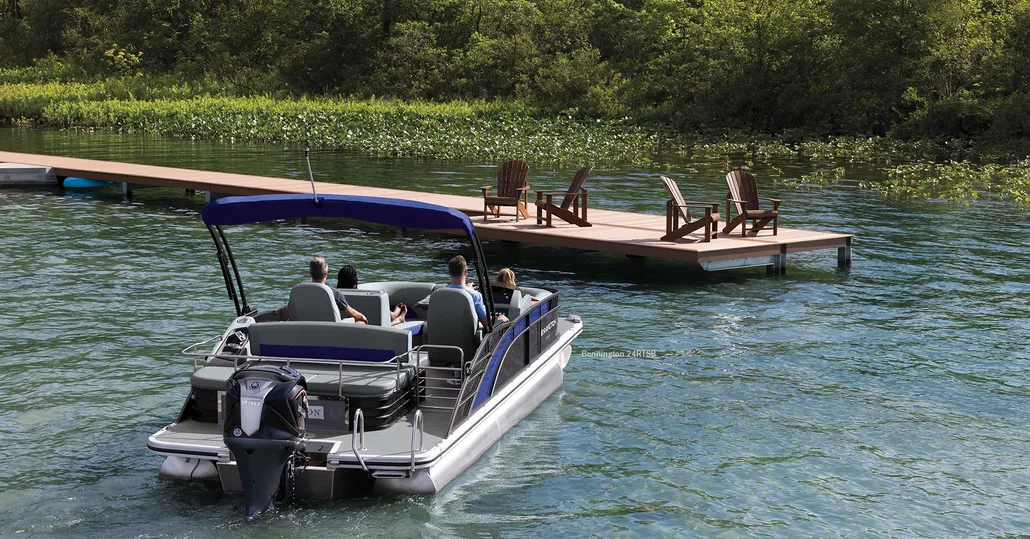
Executing close-quarters berthing maneuvers in high-wind conditions requires strict adherence to hydrodynamic principles and deliberate throttle control. On a top-tier regional waterway like Lake Lewisville, sudden wind shifts and cross-cutting gusts can quickly push a light fiberglass hull or high-profile dayboat off its intended trajectory. When approaching a marina basin or fuel dock under heavy wind load, attempting to force the angle with continuous, aggressive acceleration invariably compounds steering errors and results in expensive gelcoat fractures or bent rub rails.
To maintain total control over your vessel's alignment, North Texas captains must treat wind-affected docking as a systematic, phased operation.
Phase 1: Pre-Approach Infrastructure Staging
Maneuvering anxiety escalates rapidly if the helm operator is forced to manage crosswinds while the crew scrambles to locate lines or adjust bumpers. Complete 100% of your physical preparations in open water well before your hull enters the marina breakwaters.
- Redundant Fender Deployment: Hang heavy-duty marine fenders along both the port and starboard rails. When high winds are active within a crowded channel, a sudden gust or unexpected displacement wake from a passing wakeboard boat can easily force you against an opposite dock structure or slip piling.
- Mooring Line Alignment: Cleat your bow, stern, and spring lines early, flaking the remaining rope neatly on deck so they can be passed smoothly to dock hands without knotting.
- Crew Command Briefing: Designate a single, alert crew member to handle the primary line and another to act as a dedicated lookout. Instruct all other passengers to remain securely seated to maintain a level running attitude and keep lines of sight completely unobstructed.
Phase 2: Mastering the Phased Triangle Approach
Executing a smooth landing against a strong breeze relies on decomposing your approach vector into three distinct mechanical intervals rather than relying on continuous momentum.
- Set the Crab Angle: Prior to entering the slip axis, observe how the hull drifts in open water to calculate the exact velocity and direction of the wind vector. Point your bow slightly into the wind or current. This deliberate "crab angle" counteracts the lateral drift, allowing the wind to push you along a predictable line toward the pier rather than sweeping you away.
- Arrest Forward Momentum: Bring your speed down to dead idle early. Shift the throttle cleanly into neutral outside the slip gates, letting the hull's residual hydrodynamic drag slow your forward progress. Docking is fundamentally an exercise in managed drifting, not sustained velocity.
- Apply Incremental Micro-Corrections: Correct your heading utilizing short, brief clicks of power—engaging the gear for one to two seconds, then instantly returning to neutral. This technique keeps your propulsion systems responsive without generating excess speed that can override your steering control.
Phase 3: Technical Wind-Vector Tactics
Your entry profile must adapt dynamically to match how the atmospheric vectors interface with your boat's superstructure.
- Tactics for a Leeward Approach (Wind Pushing OFF the Dock): Approach the structure at a steeper, sharp angle—typically around 45 degrees. Aim your bow directly toward your target mooring cleat. Once the bow is within reach, shift into reverse and cut the helm toward the dock; the reverse prop wash will swing the stern in, allowing the wind to gently compress the hull parallel to the pier.
- Tactics for a Windward Approach (Wind Pushing INTO the Dock): Approach the structure nearly flat and parallel to the pier, aiming a few feet upwind of your final resting position. Shift into neutral early and let the lateral wind load naturally drift your hull down against the pilings, letting your pre-staged high-impact fenders absorb the contact.
- Confined Slip Transitions: When reversing or turning into a narrow slip layout, initiate your pivoting maneuvers significantly earlier than you would on a calm day. Delaying your turn forces you to use sudden, aggressive bursts of throttle to arrest lateral drift, which can easily destabilize your alignment.
Phase 4: Executing the Critical Abort Protocol
There is zero penalty for abandoning a compromised approach line. If a sudden crosswind gust or heavy wake pushes your bow off its targeted entry axis, immediately abort the maneuver.
- Clear the Obstruction: Do not attempt to save a poor angle by applying heavy forward throttle near a bulkhead. Shift cleanly into reverse, back out into open water, and re-align your approach vector. A controlled, calm reset is the definitive mark of professional seamanship.
- The Absolute Step-Off Mandate: Explicitly forbid your passengers from leaping or lunging from a moving deck onto a wet dock walkway. A missed line can easily be corrected with a secondary pass, whereas a slipped footing between a concrete structure and a multi-ton fiberglass hull poses an immediate, severe safety hazard.
Technical Frequently Asked Questions
What is the most effective method for an intermediate owner to build wind-docking skills?
The most reliable strategy is practicing repeatable approaches at an empty public dock or around a floating buoy during low-traffic, early-morning weekday windows, focusing entirely on idle-only control and neutral glides.
Where should I position my marine fenders to ensure maximum protection?
Always position your primary high-impact fender at the exact mid-ship beam layout, as this serves as your principal insurance policy. Secure secondary fenders closer to the stern to cushion the hull as the back of the boat swings under wind pressure.
Sourcing Authorized Technical Control Support
If your hull tracks unpredictably during slow-speed maneuvers, or if shifting your binnacle controls between forward, neutral, and reverse requires excessive physical effort, you are likely fighting an equipment deficiency rather than a lack of environmental skill.
- Certified Mechanical Calibration: Over time, mechanical shift cables can stretch, steering systems can develop internal fluid leaks or air pockets, and dual-engine electronic controls can lose alignment. Schedule a comprehensive diagnostic system audit with our factory-trained technicians at our Service bays to ensure your controls engage instantly.
- Procuring Premium Hardware: Visit our local DFW Parts department to stock your hull with high-tensile double-braided nylon dock lines, heavy-walled cylindrical fenders, specialized fender clips, and OEM safety gear.
- Propulsion System Modernization: For owners looking to replace an aging power plant or upgrade an older cruiser with modern handling capabilities, our authorized Yamaha Repower specialists can outfit your transom with digital networks and advanced joystick piloting integrations for absolute docking precision.
Asset Protection and Dealership Inquiries
What financial avenues exist for upgrading to a layout with advanced docking tech?
Our internal Financing office constructs customized loan frameworks, allowing you to bundle major component overhauls, high-performance engines, and specialized Marine Insurance into a single plan.
Can I leverage my current boat as a trade-in asset toward a newer model?
Yes. We coordinate professional, market-accurate asset evaluations through our Sell / Trade division, making it highly efficient to liquidate your old hull and apply that equity directly toward our inventory of New Boats or strictly inspected Used Boats.
How do I track upcoming events or get in direct contact with Phil Dill Boats?
To learn about our corporate legacy serving North Texas mariners since 1953, visit our About page. You can monitor upcoming captain workshops and community events on our Events page, track continuous technical maintenance guides on our Blog, meet our technical personnel on the Staff page, or see verified customer feedback on our Reviews page. To review your long-term mechanical coverages, check our Extended Service Contracts checklist, and find current promotions on our Specials page. For showroom maps and hours, check our Contact page.