


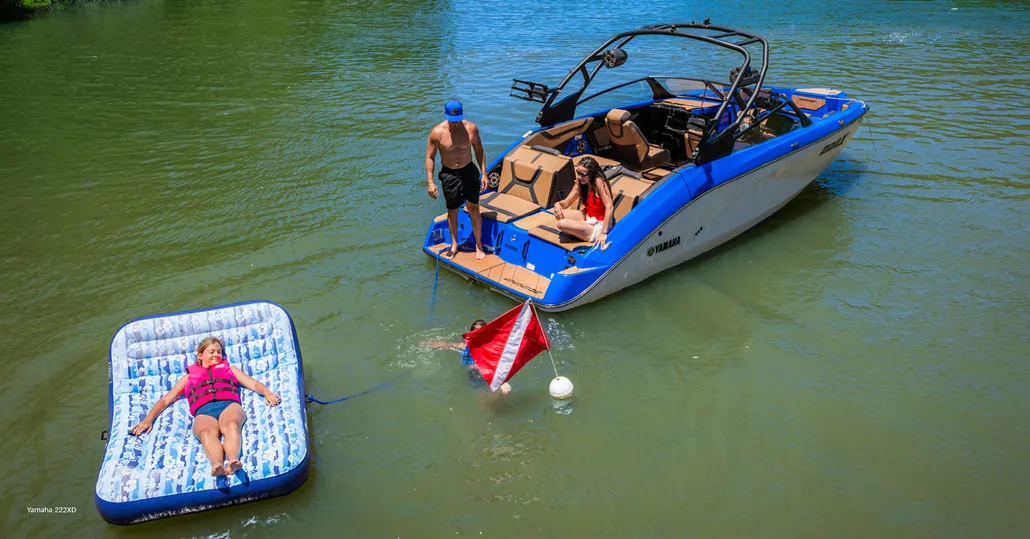
Executing a flawless stationary anchorage in a packed regional cove demands deliberate mechanical execution, clear crew boundaries, and disciplined environmental management. On Lake Lewisville, a casual approach to securing your watercraft in high-density zones like Party Cove often leads to dragging anchors, compromised deck safety, and unnecessary chaos when wind vectors or boat wakes shift. For North Texas captains, elevating a cove excursion from a high-stress monitoring scenario into a relaxed, organized retreat requires establishing absolute holding power and structured onboard protocols before the first passenger enters the water column.
By treating your stationary time with the same systematic precision as open-water cruising, you can eliminate structural liabilities and ensure your platform remains secure all afternoon.
1. Identify Strategic Coordinates Outside Navigation Channels
A drifting vessel represents a severe immediate threat to surrounding watercraft, swimmers, and your own hull integrity. Establishing a bulletproof hold relies on choosing the proper hardware and applying precise deployment techniques rather than relying on luck.
- Verify Depth and Draft Clearances: Consult your helm’s digital depth sounder to ensure the bottom profile leaves ample clearance beneath your running gear, accounting for any sudden lake-level drawdowns.
- Calculate the Swing Radius: Analyze the local wind drift and current directions before cutting your engines. Position your hull with ample clearance from neighboring boats, accounting for how a $180^\circ$ shift in wind direction will rotate your vessel along its anchor line pivot. Avoid high-traffic choke points and designated fairways entirely.
2. Calibrate Mechanical Scope Ratios
Attempting to anchor using an insufficient length of line forces the pulling energy to lift upward on the anchor shank. This breaks the flukes free from the lake bed and causes the anchor to pop out or drag.
- The Scope Formula: True scope is calculated as the ratio between the total length of the deployed anchor line (the rode) and the vertical distance from the boat’s bow roller down to the lake bed.
- The Baseline Ratios: For standard afternoon anchoring in fair weather, a 5:1 minimum ratio is required for nylon lines paired with a lead chain. If the wind picks up or heavy wakeboarding chop rolls into the cove, increase your deployment to a 7:1 or 8:1 ratio to ensure the pulling force stays horizontal against the flukes.
3. Implement Rigid Structural Onboard Deck Zones
Never simply hurl your anchor over the gunwale in a tangled pile, as this can knot the line and prevent the flukes from digging in.
- Controlled Drop Mechanics: Bring the vessel to a complete stop heading directly into the wind or current. Lower the anchor cleanly and steadily down through the water column until it contacts the mud or clay bed.
- Setting the Flukes: As the hull drifts backward downwind, pay out your line smoothly. Once you reach your targeted scope, cleat the line securely and engage light reverse throttle for three to five seconds. This horizontal pull forces the anchor flukes deep into the bottom sediment.
- Establish Baselines: Take ten seconds at the helm to log visual sightlines against fixed shoreline structures or trees to confirm your position remains completely stable.
4. Manage Complex Cove Geometry
Allowing saturated passengers, wet gear, and dry electronics to mingle across the same deck layouts creates immediate slip hazards and damages expensive personal equipment. Dividing your layout into specific quadrants maximizes crew safety.
- Respect Swings and Boundaries: Never anchor directly inside another captain's established swing circle. In a crowded cove, the first boat to anchor holds the spatial right-of-way; late arrivals must adapt their vectors to maintain a safe perimeter.
- Line Discipline: Keep your excess anchor line coiled tightly and clear of swimming zones. Saturated ropes left trailing loosely in the water column create immediate entanglement hazards for swimmers and neighboring vessels.
- The Propulsion Shutdown Mandate: Whenever passengers are swimming or lounging near the swim platform, the captain must completely shut down the ignition. Never let an engine idle in neutral while swimmers are in the water column, as accidental gear engagement poses a severe safety hazard.
Technical Frequently Asked Questions
What is the primary reason my anchor continues to drag across the lake bed?
Continuous dragging is almost always caused by using too short of a scope ratio, which causes the line to pull upward rather than horizontally. It can also stem from using an anchor design unsuited for the soft mud and clay common across North Texas lake beds, or failing to lock the flukes in using a reverse throttle pulse.
When should I consider deploying a secondary stern anchor?
Deploying a secondary anchor from the stern is highly effective when navigating tight coves or variable crosswinds. This configuration locks the hull on a fixed heading, eliminating the wide swing radius and preventing your beam from pivoting into neighboring vessels.
Sourcing Authorized Ground Tackle and Technical Support
Maintaining an elite level of seamanship requires equipping your watercraft with components calibrated to exact factory tolerances.
- Procuring Heavy-Duty Ground Tackle: Visit our specialized North Texas Parts counter in Lewisville to procure premium fluke or plow anchors, galvanized lead chains, high-tensile braided nylon lines, and immediate-use safety gear built to match your hull specification.
- Certified Power and Mechanical Diagnostics: Ensuring your steering linkages engage instantly, your dual-battery switches function flawlessly, and your bilge loops operate under load is vital before anchoring for long stretches. Schedule a diagnostic systems audit with our factory-trained technicians at our Service department.
- Propulsion System Modernization: For owners looking to replace an aging power plant with a modern system featuring advanced digital network integration and exceptional power delivery, check our authorized Yamaha Repower solutions.
Fleet Allocation and Financial Coordination
What credit frameworks exist for financing a full boat tech and safety overhaul?
Our specialized Financing office provides tailored loan configurations, allowing you to seamlessly bundle your choice of high-performance modern hull, reliable outboards, and custom Marine Insurance packages into a single plan.
Can I utilize my existing watercraft as a trade asset toward an upgrade?
Yes. We facilitate transparent, market-accurate asset evaluations through our Sell / Trade division, making it highly efficient to liquidate your old hull and apply that value directly toward our curated inventory of New Boats or thoroughly inspected Used Boats.
How do I track upcoming events or get in direct contact with Phil Dill Boats?
To learn about our corporate legacy serving North Texas mariners since 1953, visit our About page. You can monitor our active schedule of safe-boating seminars and seasonal dealer events on our Events page, track continuous technical maintenance guides on our Blog, or see verified customer feedback on our Reviews page. To review your long-term mechanical coverages, check our Extended Service Contracts checklist, and find current promotions on our Specials page. For showroom maps and operating hours, check our Contact page.